Rainy season alert from the county

September 30th, 2009 Tracy Posted in King County, White Center news, development No Comments »

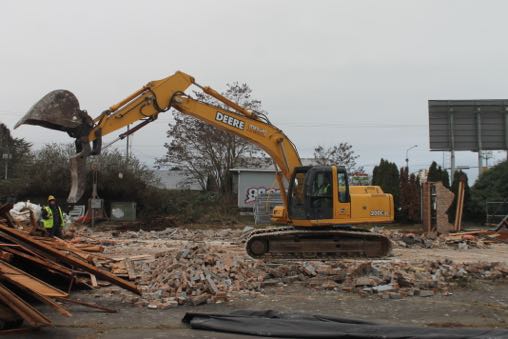
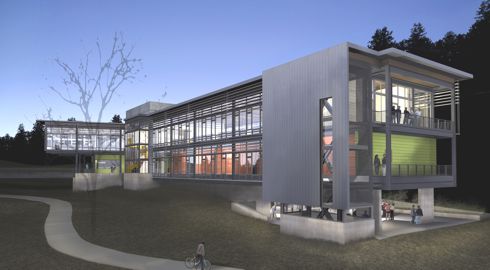
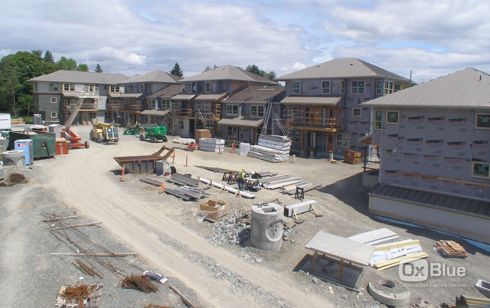
A news release we received from the county this morning – important information regarding keeping construction sites from becoming a problem during the rainy season – if you’re involved with construction, read on: Read the rest of this entry »

AddThis Social Bookmark Button

Follow Up on Editorial: Should We Take Susan Hutchison Seriously

September 28th, 2009 Ricardo Posted in Economy, Election, Government, Jail Sites, Jobs, King County, Traffic, Transportation, boulevard park, development, housing, safety, sustainability, white center 19 Comments »

For those who missed it, KUOW today broadcast an interview with, King County Executive, Susan Hutchison.  You can find the interview at KUOW Weekday.  In a prior post I had made the following observation which sparked a fair amount of discussion:

Ms. Hutchison has never held public office.  She has never had to struggle with the political realities of governing a complex political entity whose ambits include not only roads and sewers but social services, neighborhoods and law enforcement.  It is difficult to see how her experience on the board of the Seattle Symphony prepared her, in the slightest way, for such a weighty role.

If anyone had any doubt about Ms. Hutchison’s lack of specificity on issues, policies or even advisors, it is worth a listen (available on podcast).  Pressed by the moderator to name a single advisor who she consults, or who she would bring to her administration, she flatly resisted naming anyone, except to say bus drivers.  Her conclusion was “trust me” they will be great people.  I have nothing against bus drivers, but maybe she could have named a couple of the guys that she intends to bring to the Hutchison administration that will “bring people together.”  I’m sorry but calling Hutchison a “lightweight” does not begin to describe the chasm that is her lack of qualification to hold such an important post.  Listen for yourself.

AddThis Social Bookmark Button

Should We Take Susan Hutchison Seriously: Editorial by Ricardo A. Guarnero

September 23rd, 2009 Ricardo Posted in Annexation, Businesses, Economy, Election, Greenbridge, Metro, North Highline UAC, Politics, boulevard park, development, housing, white center 22 Comments »

Given that White Center, Boulevard Park and surrounding areas are governed directly by King County, the choice of King County Executive should be taken very seriously.  The two candidates are Susan Hutchison and Dow Constantine.  Constantine is a fixture of West Seattle and White Center politics, so he is a known commodity.  Not so, Susan Hutchison, who hails from the East Side of the County.  Candidate Hutchison has run a “feel good” campaign, emphasizing her position to “bring people together.”  Her website’s issues page contains four short paragraphs, with the following priorities:

Jobs & the Economy:

Susan will help give small businesses the tools they need to create jobs…

Improve Transportation:

Susan will quickly implement simple changes to encourage transit ridership…

Budget Reform:

Susan will identify waste and restructure the budget to ensure our tax dollars are being spent effectively.

Protect Our Environment.

Susan will forge partnerships between environmental, labor and business groups as we work toward our common goal…

That’s it folks, Susan Hutchison’s platform for managing one of the biggest governmental entities in the country. In her defense, it might be said that she is offering as much detail as the two lightweights who are currently vying to be Seattle’s next mayor.  But then, that’s not much of a complement.

I will forthrightly state that I do not like Ms. Hutchison’s right-wing politics and that on that basis alone, she should be disqualified for the position.  Seattle and King County residents are a tolerant, liberal community.  To have a George Bush conservative speaking for us, just does not sit well.  But what about her competence?

Ms. Hutchison has never held public office.  She has never had to struggle with the political realities of governing a complex political entity whose ambits include not only roads and sewers but social services, neighborhoods and law enforcement.  It is difficult to see how her experience on the board of the Seattle Symphony prepared her, in the slightest way, for such a weighty role.

I often disagreed with former King County Executive, Ron Sims, but I found him thoughtful, intelligent and most importantly, quite knowledgeable on any issue relating to his role as Executive of the very large and expansive King County.  On the issue of affordable housing, we know nothing as to where Hutchison stands?  Does she support the Greenbridge and High Point housing/community developments?  If so, on what basis?  If not, why not?  Where does she stand on the issue of incorporation which raises the hackles of so many of White Center’s residents?

And what of her experience dealing with communities of color or economically distressed areas?  How does her “bringing people together” chirp really address the many challenges that White Center faces?  The fact is, nothing in her background begins to give her a serious understanding of White Center or similar communities.  There is no on-the-job training for such issues.  And Ms. Hutchison has given no indication that she even remotely cares about such issues.  In the end, Hutchison is what she was in her prior role as newscaster, a pretty face with a vacuous resume.

AddThis Social Bookmark Button

Seattle Mayoral Candidate Mike McGinn A One Song Bird: Gut the Viaduct Plan – Editorial by Ricardo A. Guarnero

September 16th, 2009 Ricardo Posted in Election, Government, Politics, Traffic, Transportation, alaskan way viaduct, development, white center 11 Comments »

It appears that Seattle Mayoral Candidate, Mike McGinn has staked his campaign on one issue, gutting the viaduct tunnel plan carefully negotiated by all the relevant players.  If he wins, he has stated, he will view his victory as a mandate to undo the viaduct replacement plan.  In its stead, McGinn has promised more busses, sidewalks and bike paths.  As someone who regularly commutes on the viaduct it’s hard for me to see how more sidewalks and bikepaths is going to make my commute any easier.  Oh, yeah, and McGinn says he wants to use light rail to replace the viaduct.  Geez, I didn’t know that Sound Transit was planning a light rail leg for West Seattle and White Center.  Wait, there is no light rail leg for West Seattle.  So if McGinn is elected we can expect protracted delays on replacing the viaduct, procuring boatloads of money and the decade’s long process of what:  extending the light rail line to West Seattle.  No problema.  I’ll take the tunnel.  It’s clear that McGinn does not live in West Seattle nor does he use the viaduct to commute.

What is particularly disingenuous, is McGinn’s claim that the tunnel option was voted down by Seattle voters.  This is simply not true.  A tunnel option which would have meant tearing down the viaduct and digging up a tunnel was rejected.  The deep bore tunnel that is currently planned would leave the viaduct in place while the tunnel gets built, saving West Seattleites years of aggravating surface detours.  This option was negotiated because it provides the most mobility and least interference while it is getting built.  What McGinn is proposing would set us back a decade and have us revisit the viaduct replacement options once again.  Recall how all this useless process killed the monorail (we had to vote on it three times).  And in the meantime, we have to hope that a seismic event doesn’t make the whole thing hollow by bringing down the decrepit structure.  Busses, bikes and sidewalks, Oh My!

McGinn’s ill-defined plans for the viaduct are enough to nix the guy in my book.  Add to that, the fact that he has never held electoral office, that most of his policy positions lack any specificity and you have a feel-good kind of guy that you might pick for your soccer team, but not a mayor for a major city.  Seattle needs better.  I’m not crazy about Joe Mallahan, but he at least seems considerably more grounded on policies.  We have already had a couple of amateurs embarrass the City.  It’s time to let the grown ups proceed with real policies grounded in reality.

AddThis Social Bookmark Button

White Center Community Development Association holds luau fundraiser

August 31st, 2009 Ricardo Posted in development, white center 1 Comment »

Foregoing the usual banquet, the White Center Community Development Association held its annual fundraiser as a luau in the recently renovated White Center Heights Park.  Over $12,000 was raised; 320 attended.  The entertainment was all derived from the Pacific Islander theme, right down to the pig — roasted underground and here seen, well cooked.

Pacific Island Dancers

Pacific Island Dancers

Fire dancer at CDA luau

Fire dancer at CDA luau

AddThis Social Bookmark Button

Random Thoughts on Tacoma and White Center

July 19th, 2009 Ricardo Posted in Businesses, Crime, Economy, Full Tilt Ice Cream, Greenbridge, People, cafe rozella, development, white center 3 Comments »

Two elderly ladies walk into Cafe Rozella gushing about the cafe.  Unprompted, one of them says, “we love White Center.  We tell people we live in West Seattle, because of White Center, not in spite of it.”  I relate this anecdote, because despite it’s ragged edges, White Center is a place of vibrancy and life.

Years ago, I used to have an office job in downtown Tacoma.  If we wanted to get something to eat, we would troop into our cars and head to Old Town or the Tacoma waterfront.  The downtown core was desolate.  As one of my colleagues used to say, “you can’t buy an Aspirin in downtown Tacoma.”  Sadly, he was right, there was nary a Bartells, Walgreeens or even a small Asian grocery store to buy anything essential.  Coffee shops were nonexistent and the hilltop area was still a war zone.  I relate this, not to knock Tacoma, after all, it has really improved, but it has improved in ways far different than White Center.

Most of Tacoma’s improvement has been the subject of heavy top-down government investment and tax incentives.  While the Greenbridge Project on the west side of White Center might be considered similarly, “top down,” it is but a small part of what makes the area a better place.  White Center has always had a community and a functioning business core.  Many White Center businesses, (Center Tool Rental, White Center Glass), have been there for decades.  Nonetheless, there was a time, not too long ago, when the walk on 16th Avenue SW, south of Roxbury, was undertaken with trepidation and certainly never after dark.   Today, White Center is a different place.

Immigrants from all parts of the world have opened businesses throughout the White Cener business core. This is organic growth, from the roots up.  Projects such as Greenbridge seek to encourage such growth.  As well, there are businesses opening from locals who want in on a dynamic area.  Cafe Rozella is but one, there is also Full Tilt Ice Cream, Proletarian Pizza and word of a couple of other new businesses.  These are businesses operated by young people who are dynamic and future-oriented.  Tolerant and educated, they are what social scientist, Richard Florida would call the creative class.  Rather than berate the lack of a McDonalds, we celebrate the Pho shops, the Salvadorean pupusas and the Guyamas Burritos amongst many other great eating establishments.

So next time you have friends visiting from out-of-town, do the Space Needle but bring them to White Center and invite them to take in the rich melting of cultures inherent in this corner of the world.  And, if by chance, one of your guest gets a headache and, if you want to buy an Aspirin there is the Super-Walgreens and the local Bartells.  But I suspect a custom ice cream cone from Full Tilt or an Americano from Cafe Rozella would work just as well.   Cheers!

AddThis Social Bookmark Button

New Pizza Place Coming to White Center

May 27th, 2009 Ricardo Posted in Businesses, Economy, Food, development, white center 10 Comments »

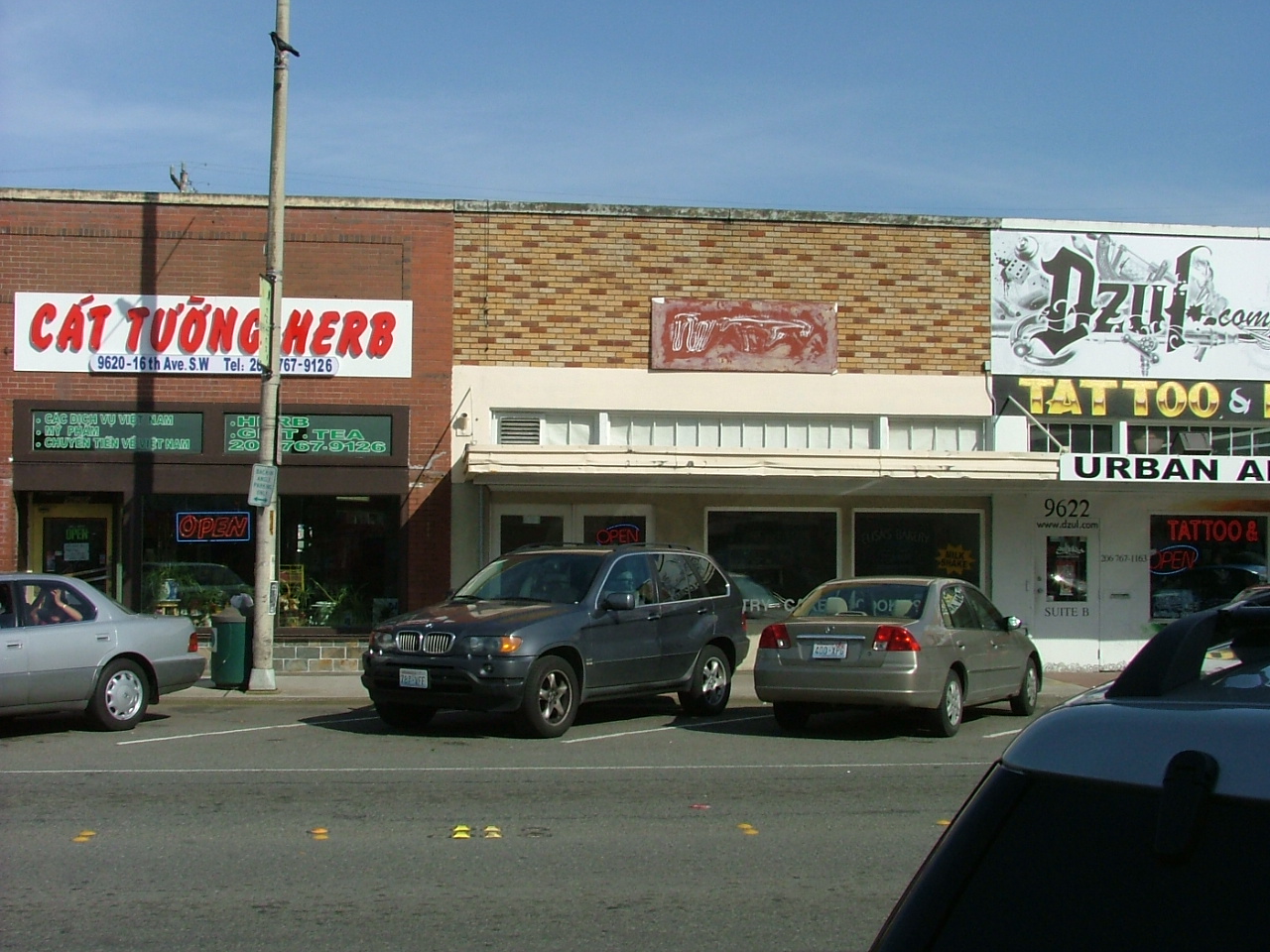
The heart of White Center will host a new pizza parlor. In keeping with our Commie-working class theme, the pizza place will be named Proletariat Pizza. The location is the old Elisa’s Bakery site, just across the street from Full Tilt Ice Cream. Great News for White Center!

Future Site of Proletarian Pizza

Future Site of Proletariat Pizza

AddThis Social Bookmark Button

Announced: Parade Route for Devil’s Dance Parade in White Center – May 29th – 6 p.m.

May 19th, 2009 Ricardo Posted in Arts, Full Tilt Ice Cream, Fun, Music, cafe rozella, development, white center 3 Comments »

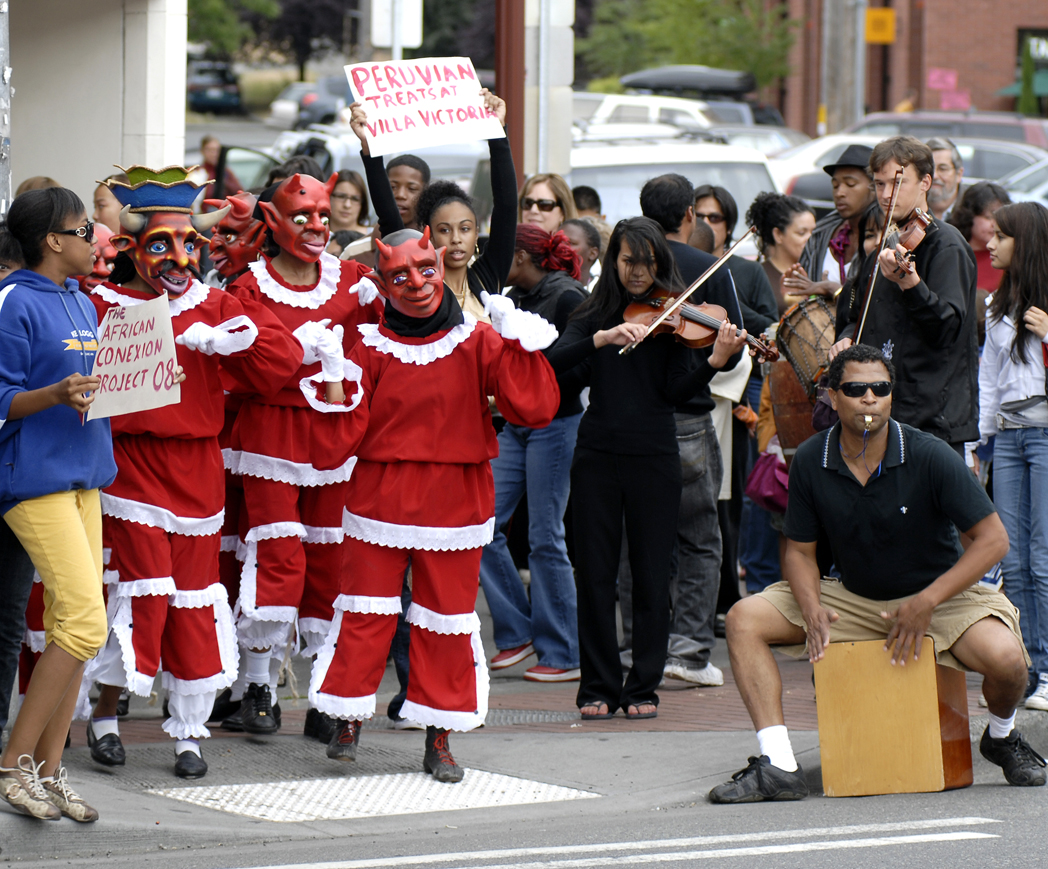
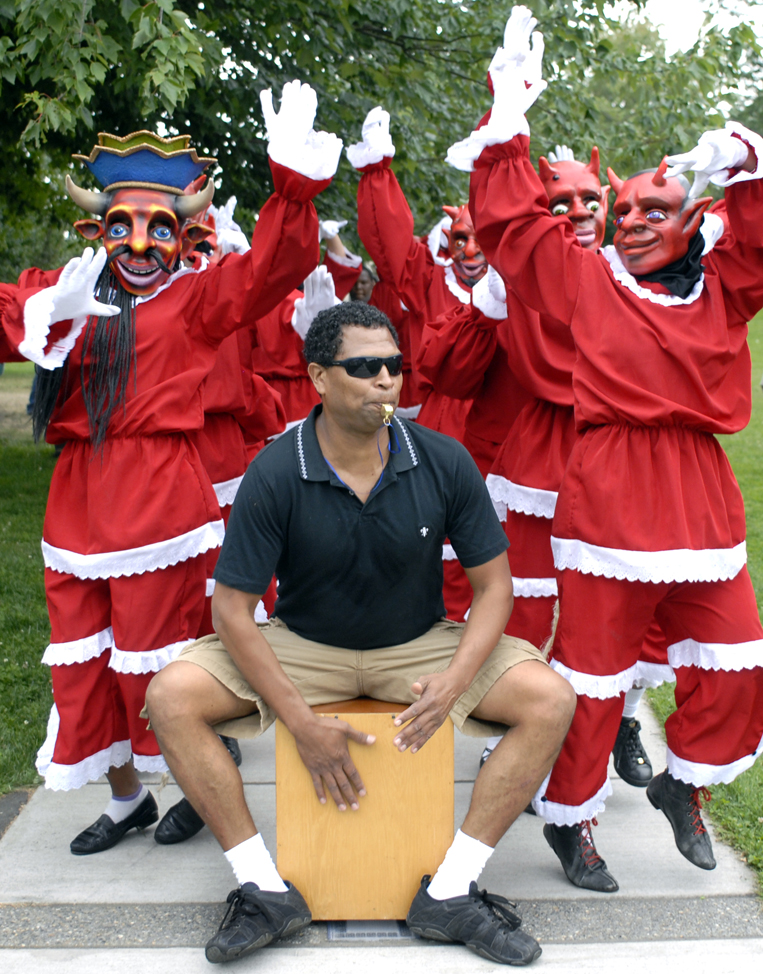
Son de los Diablos Parade

Son de los Diablos Parade

The Parade Route for the Devil’s Dance has been announced: The Parade starts at El Paisano, on the corner of 15th Ave. SW and Roxbury, proceeds to La Fondita at SW 98th St., and then to Full Tilt Ice Cream at 9629 16th Avenue SW then to the Triangle at Roxbury/16th Ave. SW/Delridge and then from there to Cafe Rozella for a Muscial Performance. (Choreography by Monica Rojas, Ph.D.)

Diablo Dancing to Afro-Peruvian Rythms.

Diablo Dancing to Afro-Peruvian Rythms.

Afro-Peruvian Dance and Music:  El Son De Los Diablos
NPR States, “Afro-Peruvian music has complex, sensual rhythms. Its instrumentation is spare, originally just nylon-string guitar, bass and a wooden box called cajon. When it started getting outside attention in the mid-’90s, it felt new. The music’s lean architecture and introspective mood differentiated it from the likes of salsa and merengue.”
“The people of the so-called Black Pacific were so far removed from their African origins that the creators of Afro-Peruvian music couldn’t rely much on cultural memory. So they created instruments, rhythms and a compelling musical aesthetic that was largely a product of their imaginations. The pride of Afro-Peruvian music is the lando, an elegant dance with intertwined rhythms and a seductive undertow.”
El Son De Los Diablos will feature the musicians behind Grammy Award Winner Susana Baca.  Truly a unique experience of a hot new trend in Latin American Music.
Admission is FREE

Diablos do choreagraphed dance movements

Diablos do choreagraphed dance movements

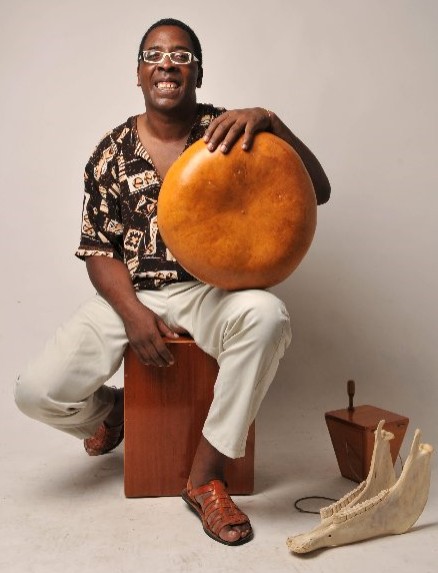
AFRO PERUVIAN PERCUSSION; The Cajon

African slaves were brought over to the Spanish colony of Peru in the 16th century to work mainly in the gold and silver mines of the high Andes. However their physique was not suited to the high altitude and they died by the hundreds. Their Spanish or Creole (descendants of European settlers in Latin America) masters sent them to work in the milder climate of the desert coast, where they laboured in the large haciendas; private farms. It was in their small huts, on the packed dirt floors of the courtyards overrun with animals and in the fields of cane and sugar cane that Afro-Peruvian music, song and dance were born.

The beginnings of slavery in Peru were different from the rest of the Americas. Although in Brazil or Central and North American countries it was common to import large groups of slaves from the same African tribe, only small and geographically dispersed ethnic groups were brought to Peru. This was meant to discourage rebel movements around the tribal chiefs, and as such, made almost impossible the preservation of communal traditions. Without a common language or tribal authority to remind them of their roots, Peruvian slaves were progressively integrated into the culture and language of their new country. As a result Afro-Peruvian music is a unique blend of Spanish, Andean and African traditions.

Centuries old, this music started to gain recognition in Peru about 40 years ago and it has became popular in the last 25 years. It was born in the coastal barrios (suburbs) and towns and was reconstructed and resurrected thanks to the work of a few artists and historians. Because the Africans were forbidden from playing their own instruments, percussion instruments developed out of the simplest household appliances; spoons, kitchen chairs, table tops, boxes, handclaps, until it reached this century with the creation of the cajon as a specific instrument to play music.

The cajon which is a wooden-box in which the player sits on to play, is thought to have originated in Peru.  The cajon is made out of hardwood with the front cover being of a very fine layer of plywood. The cajon has an open circle cut at the back of the instrument. The player sits and plays two main strokes as well as a few other variations. The main two consist of: the tone of the box which is played with the full palm in the middle of the “head” (this stroke is usually a bass or palm sound on a variety of African derived hand drums found around the world) and the slap which is played on the edge of the “head” of the instrument (this sound also part of the technique used in many hand drums around the world).

Cotito - El cajon

Cotito - El cajon

(A big thank you to Latino Cultural Magazine for the photographs.)

May 23rd, (Saturday), 7:30pm,  Afro-Peruvian percussionist Juan Medrano Cotito releases his new CD “La Voz Del Cajon” at  Langston Hughes Performing Arts Center.
$20 including CD.

These events are sponsored by AFrican ConeXion Project, 4Culture and Cafe Rozella.

AddThis Social Bookmark Button

More White Center Spring Clean Photos

May 17th, 2009 Ricardo Posted in Arts, development, white center 6 Comments »

Dig these cool binister designs by Kim McCarthy.

Kim at work

Kim at work

AddThis Social Bookmark Button

White Center for the Arts Open Studio Tour

May 14th, 2009 Ricardo Posted in Arts, Cultural Center, development, white center No Comments »

Once again, it is time for the
White Center for the Arts Open Studio Tour

This coming Saturday, May 16th, 2009 5 PM until 10 PM

Please join us as we present eight artists’ new work.
A wine and cheese event.

White Center for the Arts Building
9639 16th Ave SW
White Center, WA

206-306-6230 for additional information

www.whitecenterforthearts.org

AddThis Social Bookmark Button

White Center Spring Clean Up Coming May 16th

April 24th, 2009 Ricardo Posted in Graffiti, development, white center No Comments »

AddThis Social Bookmark Button

About that $6 million deal … It’s for White Center Square

April 1st, 2009 Tracy Posted in King County, White Center news, development 4 Comments »


View Larger Map

Several White Center Now commenters asked questions following our publishing the other day of the King County Council’s news release announcing a $6 million financing deal for a “retail plaza … near Greenbridge.” What’s the project, and what’s “White Center Investment Fund LLC”? they asked. Alcina noted that the state corporation files include no such entity. We put the question to King County Council Chair Dow Constantine’s office, and James Bush explains:

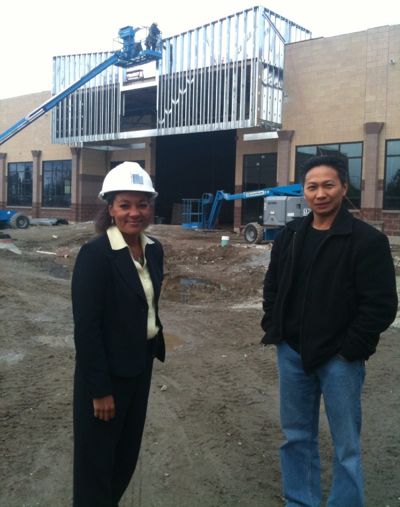
“White Center Investment Fund LLC” is an entity set up for this loan by U.S. Bank. It’s a Delaware limited liability corporation, as are many of the local LLCs set up for development purposes. In this sort of federal tax credit arrangement the money moves around from entity to entity, but where it will end up is as a loan to Vongs LLC, a corporation owned by the Vong family. They have an Asian grocery store in White Center which will move into a much larger space in this project when it is completed.

The White Center Square site is at SW 100th/14th SW (Google Street View, above). The project’s total cost is expected to be around $10 million. Here’s the ordinance the council passed; we had spoken with the company working on the project recently, and they said they’re hoping to break ground around the end of this month.

ADDED WEDNESDAY NIGHT: KING 5 TV news was in White Center today to do a story about the project and the area’s revitalization in general (what? no Rozella/Full Tilt interviews?); see it here.

AddThis Social Bookmark Button

Microfinance as a way to develop White Center

March 30th, 2009 Ricardo Posted in Businesses, Economy, Jobs, development, white center 1 Comment »

Most people are aware that the greatest impediment to the start and development of the business is lack of capital.  Tradtionally, banks only lend money to people who already have money.  This makes it extremely difficult for would-be entrepreneurs to start a business — even one that is desperately needed.  One solution  to this quandry is the pooling of resources by a community to assist its members with the initial loan that gives them entry.  The Asian and Latino communities already have models of this practice, the latter known as Tanda.  Variants of this practice are known broadly as microfinance.

Microfinance refers to the provision of financial services to poor or low-income clients, including consumers and the self-employed.[1] The term also refers to the practice of sustainably delivering those services. Microcredit (or loans to poor microenterprises) should not be confused with microfinance, which addresses a full range of banking needs for poor people.[2]

More broadly, it refers to a movement that envisions “a world in which as many poor and near-poor households as possible have permanent access to an appropriate range of high quality financial services, including not just credit but also savings, insurance, and fund transfers.”[3] Those who promote microfinance generally believe that such access will help poor people out of poverty.

I would be curious to know if readers have any thoughts on this subject and how it might used as a tool to spur economic development and vitality in White Center and other areas.

AddThis Social Bookmark Button

Homeownership for the Community – Thursday, April 9th @ 6 p.m

March 25th, 2009 Ricardo Posted in Economy, Real estate, development, housing, white center No Comments »

Homestead Community Land Trust (HCLT) will be holding a special Informational Session at the Greenbridge Library, 9720 8th Ave. S.W. on Thursday, April 9th from 6 to 7:30 p.m. for anyone interested in learning more about affordable homeownership opportunities.

Homestead is partnering with eligible homebuyers to create affordable homeownership in the White Center and Boulevard Park.  How it works is the homebuyer selects a home that is FOR SALE and fits their needs and budget.  They pay $100,000 less than the sales price, significantly reducing their monthly mortgage payment.  In exchange for receiving the $100,000 –which does not have to be paid back – the homebuyer agrees that when they decide to sell, they will sell to another income eligible buyer at an affordable price.  In this way, the community maintains a stock of affordable homes and the homebuyer passes on the affordability to the next buyer.

For example, a recent Community Land Trust homebuyer in White Center is paying $950/month as their housing payment for a 2 bedroom single family home with a large basement and detached garage.  They have a stable monthly payment, have the opportunity to build equity, can live there as long as they want, and they receive the tax benefits of homeownership!

To qualify, you must  a) be a first-time homebuyer   b) earn less than 80% area median income for King County**   c) have the ability to be approved for a home loan   d) have a desire to live and own a home in the White Center/Boulevard Park community   e) have 1% or $2500 to put towards the down payment.

Please help get the word out by encouraging eligible future homebuyers to attend the session.   At the session we’ll provide:

  • An overview of Community Land Trusts and our approach to homeownership
  • A detailed view of Homestead’s Purchase Program for White Center/Boulevard Park
  • Steps to getting started on the path to Homeownership

You can contact Laura Evans with any questions or to RSVP for the session.

Laura Evans

Homeownership Program Manager

Homestead Community Land Trust

2524 16th Ave. S. Suite 300

Seattle WA 98144

ph: 206 323 1227 ext. 111

fax: 206 588 0253

www.homesteadclt.or

AddThis Social Bookmark Button

Interesting Article on Kindred Cafe in NYC

March 16th, 2009 Ricardo Posted in Businesses, Economy, cafe rozella, development, white center No Comments »

From the New York Times, a story of a cafe, not unlike Cafe Rozella:

Vox Pop was “kind of placing a bet on an emerging neighborhood” when it opened, said Sander Hicks, an author and political activist who started Vox Pop with Holley Anderson, his girlfriend at the time. He also published a free newspaper, The New York Megaphone, and was elected president of the merchants’ association. “We always used to say, it’s about smart growth, not gentrification,” Mr. Hicks said.

How different it was just four and a half years ago, when Vox Pop opened. “This was all 99-cent stores and video stores, socioeconomically challenged, surrounded by lovely Victorian houses that people have lived in forever,” Ms. Ryan said.

AddThis Social Bookmark Button

King County Food and Fitness Initiative needs your feedback.

March 13th, 2009 Ricardo Posted in Food, development, white center No Comments »

Please contact David Daw at David@wccda.org for a copy of the survey.

King County Food & Fitness Initiative is working to transform the food environment in our area so everyone can have access to affordable, healthy, locally grown food. By completing this survey you will be helping the White Center Food & Fitness Advisory Council select priorities to create a plan and implement changes around food systems in White Center.

*Please return survey by Monday March 23rd to: David Daw- Neighborhood Revitalization Program Manager, White Center Community Development Association, 1615 SW Cambridge Street, Seattle WA 98106 -Phone 206-694-1082 -Email: David@wccda.org.

AddThis Social Bookmark Button

Viaduct to be replaced by a tunnel

January 13th, 2009 Ricardo Posted in Transportation, White Center news, development 1 Comment »

That’s a WSDOT graphic of a cross-section from the proposed tunnel; here’s the official news release from the governor’s office:

Gov. Chris Gregoire, King County Executive Ron Sims, Seattle Mayor Greg Nickels, and Port of Seattle Chief Executive Officer Tay Yoshitani today announced their agreement to replace the Alaskan Way Viaduct with a deep bored tunnel under downtown Seattle. The plan also includes investment in improved bus service, east-west city streets, a new seawall, relocated utilities, and an upgraded waterfront.

The agreement is the result of a year-long study of solutions for replacing the central section of the Alaskan Way Viaduct. Thousands of hours of technical analysis, public meetings, and letters and emails from the public, interest groups, and local jurisdictions were considered.

“Building a deep bored tunnel will support a strong economy today and in the future,” Gregoire said. “This decision will improve public safety, help ensure Seattle is a 21st Century international city, and generate thousands of new family-wage jobs in the Puget Sound region.”

The bored tunnel will be approximately two miles long and carry four lanes of traffic. Drivers will bypass downtown by entering the tunnel near the sports stadiums in the south and connect to SR 99 north of the existing Battery Street Tunnel.

The total cost of the investments is $4.24 billion. The state’s commitment of $2.81 billion will be used for a new state route 99 corridor from the sports stadiums to South Lake Union in a bored tunnel, and restoring land under the existing viaduct to a four-lane surface street.

“There are pivotal moments when great cities make history,” said Nickels. “Today, we come together with a plan that creates more transit. We ensure that our city remains economically competitive. And we reclaim our destiny as a true waterfront city—tearing down an elevated highway and re-connecting Seattle to Elliott Bay.”

The project costs for the city are $930 million to replace the central seawall and construct a waterfront promenade, relocate utilities, build a streetcar on First Avenue, and improve east-west streets. The county will seek new motor vehicle excise tax authorization from the legislature to fund over $190 million in transit capital and $15 million annually in operating expenses. Port CEO Tay Yoshitani will ask the Port Commission to consider a $300 million investment in the replacement of the south mile of the viaduct and a new east-west connection to the container terminals.

The agreement also includes federal funds toward the Spokane Street Viaduct and Mercer Street projects. These projects provide critical east-west connections for west side neighborhoods. Seattle’s waterfront will become a world-class destination when the viaduct is taken down and replaced with a four-lane surface street and open space. The central seawall will also be replaced.

Investments in transit will add 17,000 new riders to King County METRO buses. New service will be provided for west side neighborhoods that use the viaduct to go to downtown Seattle. A new streetcar will be built on First Avenue from Pioneer Square to Seattle Center.

“This agreement will improve our transportation system, improve our quality of life and make an historic shift in the way we view mobility in an age of global warming,” said Sims. “There are only four lanes in the bored tunnel and the plan includes a new stable source of transit funding that will help Metro make a vast increase in service, which will mean fewer cars on streets, less pollution and better traffic reliability for business and industry.”

The Port of Seattle serves as an international gateway for the region – bringing cargo in and sending Washington goods to the world,” said Yoshitani. “Our cargo, cruise, fishing and industrial facilities – and the thousands of jobs they support – need a transportation network that keeps people and goods moving.”

Construction of a bored tunnel will begin in 2011 and be open to drivers in 2015. Added transit service will begin next year, and the Spokane St. and Mercer St. projects will be completed by 2012. It is expected this proposal will establish 10,000 jobs in a ten year span.

AddThis Social Bookmark Button

Cafe Rozella Wants to Thank Our Wonderful Patrons

January 2nd, 2009 Ricardo Posted in Businesses, development, white center 1 Comment »

Cafe Rozella, White Center’s hub and coffee house, wants to thank all our wonderful patrons for making 2008 our best year and for electing Barack Obama, President of the U.S.

We look forward to better times.  We cannot pass this opportunity to give thanks to: Mike the artist, mike the mechanic, mike the longshoreman, little mike and big mike, Cherrie, Onion, Eric the Swede, Joan, Carlos, Eduardo, Bill, Bill and Bill, Robert, Aileen, Laura, Jorge, Argelia, Paige, Eric, Vassily, Carmen, Flora, Sim, Chica, Jason, Anne, Jeremy, Austin, Ron, Gabrielle, Athena, Chad and Tracy, Andrew and Moe, Jessica, David, David and David, Ruth, Ringo, Paul, John, Maury, Rob, Gary, Gary and Marjorie, Jim, and everyone else who contributed to the wonderful community that is White Center and Cafe Rozella.  We love you all.  Truly.

AddThis Social Bookmark Button

Ron Sims on KUOW: Only Site for Seattle Jail is downtown next to present jail.

December 18th, 2008 Ricardo Posted in Highland Park, Jail Sites, Politics, development, white center, white center community safety coalition 2 Comments »

Ron Sims was on KUOW this morning.  The issue of the jail’s location was raised by one caller and Sims was unequivocal in saying that, as far as the County goes, the only viable site is downtown, next to the present jail.  This has been my position all along, for reasons which I will be glad to elaborate.  But, the placement is not in the County’s hand, given that this is a regional jail for misdeamenants.  The City of Seattle is the gorilla in the room on this one.  I for one, do not comprehend why they would imbroil the city in litigation (and delay the construction) over the placement of a jail by inserting it into a neighborhood.   Nobody would bat an eye, and everyone would be happier, if the jail was located downtown.  I am not a big Sims fan, but he actually had a number of good ideas today.  More importantly, he didn’t seem burned out, as he has in prior interviews.

PS:  You can twitter Sims and he will add you to his twitter list, giving you direct access.  Do you suppose we could convince Mayor Nickels to put us on his twitter list?

AddThis Social Bookmark Button

Greenbridge: The Failure of the Cabrini-Green Model of Public Housing and the Rise of the New Urbanism

November 28th, 2008 Ricardo Posted in Crime, Greenbridge, Real estate, White Center news, development, sustainability, white center No Comments »

The modern debate on urban housing policy takes as its starting point the post-World War II period when the country invested heavily in developing cities and its suburbs.  An outgrowth of the New Deal was  the belief that government should ameliorate the problem of housing for those unable to afford the cost of commercial or private housing.   The response to the housing problem was a mixture of modernist thought, good intentions, government bureacracy, racial attitudes and local politics.   While this subject is vast and would require tomes to fully comprehend it, we are here most concerned with the present moment in Seattle’s urban design and specifically the philosophy behind the Greenbridge Project.

The model against which much of the current thinking pivots is the Chicago Housing Authority and its notorious housing projects such as the Cabrini-Green projects.  Witold Rybczynski is an architect and an astute observer, with a sweeping knowledge of urbanism and a very accessible writing style.  I was introduced to Rybczynski’s writing when I was designing a home about 15 years ago and happened upon his meditative tome, “The Most Beautiful House in the World.”  Rybczynski took Cabrini-Green as a paradigm for the development of urbanism for a 1993 article entitled, “Bauhaus blunders: architecture and public housing – 1950s public housing estates Cabrini-Green, Chicago, Illinois, US“:

CABRINI-GREEN IS a large, inner-city public housing project on Chicago’s Near North Side. It attracted national attention in October of 1992, when a seven-year-old boy walking to school with his mother was fatally shot (for no apparent reason) by a sniper from an abandoned apartment in one of the project’s high-rise buildings. The tragic shooting was widely reported, and journalists drew predictable, if farfetched, parallels with violence-ridden Sarajevo. What struck me was how much the background behind the television reporters really did resemble Sarajevo–that is, it looked European rather than American. It was not only the bleak expanses of grassed public spaces rather than streets, and the lack of private gardens, but also the sight of tall, institutional-looking apartment blocks rather than of neighborhood streets lined with single-family houses.
What I saw of Cabrini-Green on television after the shooting was a reminder, as the housing critic Catherine Bauer wrote more than thirty-five years ago, that “Life in the usual public housing project just is not the way most American families want to live.” That this was not always so is evidenced in Cabrini-Green itself, which is a veritable Olduvai Gorge of American public housing policy evolution.

Cabrini-Green is but one of the most notorious housing projects known for its drab and sterile concrete towers of festering poverty, rampant crime, trash-strewn stairwells and unmitigated squalor.  Most of the towers are now being torn down.

The oldest housing on the site dates from 1941, not long after the Housing Act of 1937 that signaled the first involvement of the federal government in funding housing for what there then called the deserving poor. Frances Cabrini Homes was named after a soon-to-be-canonized Chicago nun, famous for her charitable work, and it was built on the site of a notorious Italian-American slum kown as Little Hell. The new housing consisted of almost 600 dwellings in two- and three-story brick buildings; the total area of the project was relatively small: sixteen acres. The unassuming architecture of these row homes–every dwelling had its own front door on the street–was not substantially different from the popular urban housing then being built by the private sector in the surrounding city. The brick facades even incorporated some decorative elements. The overall design, like that of most prewar public housing projects, is modest but unremarkable; it was taken for granted that poor people would prefer to live lie everyone else.  (emphasis added)

Although Cabrini-Green has become synonymous with large government-run slums, they were not the largest or worst of its kind.  Hunt D. Bradford has written a concise piece on the Robert Taylor Homes, a larger Chicago Housing project in piece entitled, “What went wrong with public housing in Chicago? A history of the Robert Taylor homes.”

The choice to build large-scale developments proved to be problematic, as it helped concentrate, isolate, and stigmatize public housing residents, with the distinction between the “project” and the rest of the neighborhood clear and unmistakable.
Cabrini-Green towers undergoing demolition.

Cabrini-Green towers undergoing demolition.

The high-rise design of the Robert Taylor Homes was not purely a product of modernist architecture theories, and the design cannot be blamed entirely on Mayor Daley’s desire to “warehouse” the poor. Instead, Chicago’s insistence on using expensive black belt slum sites and the PHA’s (Public Housing Authority) shortsighted political concern with costs led to the use of high-rises. Daley did nothing to challenge public housing’s black belt locations, nor did he provide leadership that might have opened up vacant land sites in white areas for more low-rise, row house projects. But his efforts on behalf of low-rise alternatives for Chicago’s slum clearance projects have gone unnoticed. Tragically, Daley, the CHA, (Chicago Housing Authority) and the PHA all understood that low-rise rowhouses were far superior for large families with children.
Cabrini-Green Tower

Cabrini-Green Tower

Importantly, the initial tenants of Taylor were predominantly working-class, two-parent families with low but not impoverished incomes. In 1963, two parents headed roughly two-thirds of Taylor’s families. Roughly half were working-class and received no government benefits, while a third relied on the federal government’s primary welfare program, Aid to Dependent Children (ADC). The remainder received other forms of federal aid, including Old Age Assistance, Social Security, and Veterans benefits. With a median income of $12,700 (in 1984 dollars), Taylor residents earned about half as much as the average Chicago resident in 1963… Taylor’s tenant base underwent a dramatic decline in socioeconomic status in a mere seven years. Between 1967 and 1974, the percentage of working-class families fell from 50% to 10%, while reliance on ADC (Aid to Families with Dependent Children) shot up from 36% to 83%. The mass exodus of twoparent, working-class families and their replacement with non-working, female-headed families caused the bulk of the change, though an unknown portion of existing residents shifted from work to welfare status. With the loss of working-class wages and with the failure of welfare benefits to keep pace with inflation in the 1970s, average incomes at Taylor plunged after 1969. The CHA was not alone in experiencing these trends, though in Chicago they occurred more rapidly and with greater severity than in other cities.
Crime was rampant in Cabrini-Green

Crime was rampant in Cabrini-Green

The current plan to demolish Taylor acknowledges the monumental failure of the public housing model as conceived in the 1950s. Sprawling high-rise projects housing exclusively poor families with many children amounted to a tragic, terrible mistake. Today’s “New Urbanist” planners have learned these lessons and use projects like Taylor as a foil for their small-scale, mixed-use, mixed income communities now sprouting in urban areas. “New Urbanism” has its roots in the critique of public housing begun by Jane Jacobs in her 1961 book, The Death and Life of Great American Cities.  Jacobs celebrated the diversity and complexity of the fragile working-class urban neighborhoods labeled as “slums” by planners. She advocated rehabilitation, not clearance. Provocative and controversial in her time, Jacobs’ basic ideas today permeate progressive thinking. Replacing Taylor with a “New Urbanist” neighborhood will not be easy, and will require the concerted efforts of the city to ensure that former residents are treated fairly. While government at all levels must continue and, indeed, increase its efforts at addressing the housing needs of the poor, the Robert Taylor Homes experience makes perfectly clear that what should constrain government involvement is not the nobleness of its intentions but its effectiveness in achieving them.

The consensus it that the project tended to congregate poverty and stigmatize the residents.  As articulated by Rybczynski:

Although Cabrini-Green occupies almost as much land as the Loop itself, it is not the biggest public housing project in Chicago–that dubious honor belongs to Robert Taylor Homes, said to be the largest public housing project in the world. But Cabrini-Green was the first of the big projects, and it did become a model for how municipal authorities would rehabilitate deteriorated inner-city real estate and provide large amounts of public housing. The solution–bulldoze existing houses and replace them with tall apartment slabs spaced far apart in open parkland (created byh closing off existing streets to make immense “supper-blocks”)–reflected the prevalent social and architectural thinking of the time. As Bauer pointed out, his was not how the majority of Americans really lived–or would choose to live–but the idealistic housing reformers felt that they knew best.

Architects and planners maintained that high-rise buildings were better because they occupied less land, and provided their occupants with sunlight and unobstructed views, but the Chicago Housing Authority was probably attracted to Modern architecture for the same reason that many commercial developers were partial to the designs of Mies van der Rohe–their cost. The truth is that standardized, stripped-down, and undecorated tall buildings can be erected quickly and inexpensively. It is also likely that the plain architecture suited the puritan view of many Americans–and certainly of the housing reformers–who felt that social housing should not be fancy. Soon, utilitarian high-rise apartment towers were accepted as the best solution for public housing.

High-rise slums

However, it was one thing to build apartment towers for the upper-middle-class, as Mies did, and quite another to adopt them as solutions for housing the poor. The well-off have doormen, janitors, repairmen, and baby-sitters; the poor have none of these things. Without restricted access, the lobbies and corridors were vandalized; without proper maintenance, elevators broke down, staircases became garbage dumps, roofs leaked, and broken windows remained unreplaced; without baby-sitters, single mothers were stranded in their apartments, and children roamed unsupervised sixteen floors below. In Cabrini-Green, there were problems with the design of the buildings: To save money, no private balconies or terraces were provided, access galleries and elevator lobbies were left open to the elements (in frigid Chicago!), and despite the lack of air-conditioning, the unshaded apartment windows of the tall buildings faced east and west.

Equally unsuccessful was the overall layout which dispensed with the familiar street and supplanted it with parkland, although what little landscaping there was quickly disappeared and was replaced by beaten dirt and asphalt parking lots. In any case, the open pedestrian spaces were problematic: windy, unappealing, and more crime-prone than conventional streets and sidewalks overlooked by individual homes. In the name of housing the poor, the well-meaning social reformers of the 1950s invented a new type of urbanism, quite foreign to any previous American ideal of city planning. It is hardly surprising that the projects acquired a social stigma. This, as well as crime, drugs, and poor management, explains why today one-third of the apartments at Cabrini-Green remain unoccupied [and are now being demolished].

The reaction to the failure of Cabrini-Green style projects was a return to a style termed, the New Urbanism.  Again,  Rybczynski:

The carefully crafted project of the winning team is representative of a current approach to urban design that has been termed neo-traditional, but whose adherents prefer to call it the New Urbanism. The New Urbanism represents a turning away from the principles that have characterized American urban design since the 1950s, a rediscovery of the virtues of traditional, gridded streets scaled to the pedestrian, and a return to cities that integrate a diversity of urban uses–commercial and industrial as well as residential–rather than being zoned according to single functions. So far, the accomplishments of architects and planners like Peter Calthorpe, Daniel Solomon, and Andres Duany and Elezabeth Plater-Zyberk, have been predominantly suburban in location and aimed at an upper-middle-class clientele, but the commercial successes of the New Urbanism are evidence of its broad appeal to consumers and developers alike. It seems entirely appropriate that such a mainstream, pragmatic approach should be appealing feature of the New Urbanism is architectural design whose flavor is regional rather than international. In Nelson and Faulkner’s proposal, moreover, the traditional design approach means that public and private housing are indistinguishable. “One must avoid the danger of building for the poor under regulations or in a style very different from that to which the middle class is accustomed,” wrote Nathan Glazer in the pages of The Public Interest in 1967. Just so. Despite the argument of one of the Carbini-Green competition entrants that “Architecture is not the solution, architecture is not the problem,” it’s obvious that large islands of high-rise apartment blocks that contribute to social isolation are a problem.

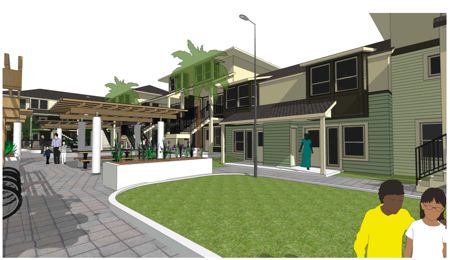
Which brings us to the Greenbridge, High Point and Holly Park developments in Seattle.  Each of these projects reflects completely the philosophy of the New Urbanism and the rejection of the Cabrini-Green model.   The development are designed to mix inhabitants of different income levels.  As well, the housing is of a human scale with an emphasis on street life, walkability and sustainability.   Most critically, these developments aim to look like housing, that anyone, regardless of their station in life, would choose to live in.

AddThis Social Bookmark Button